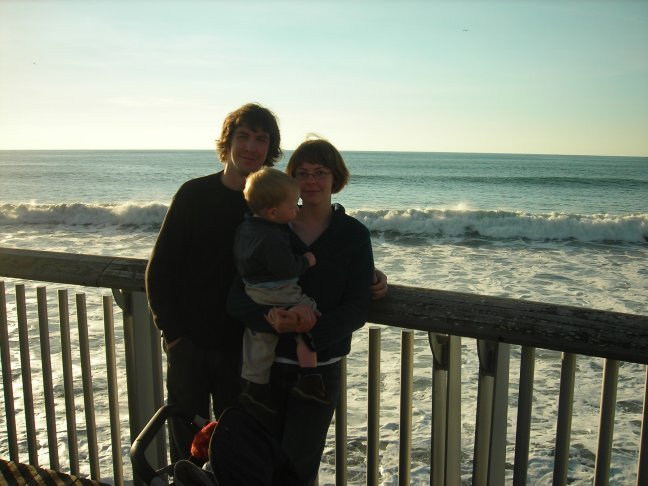
Yesterday I wrote about how much we love our children. I got a couple of answers to that - some on facebook, others on here - along the lines of "of course we would be reconciled, of course that is the better thing to do, of course that is the thing Jesus teaches us to do".
Now another question.
Does God (through Jesus) ask more of us than he would be willing/able to do himself?
We would forgive our children and desire reconciliation with them - even after death if we could. We would not tell them never to come near us again - even after death, if we had the choice. We would never, ever tell them it was too late. Yet we are supposed to believe that God would refuse to even give the option of reconciliation and forgiveness, and would choose to reject them?
The God who is both loving and just.
The God of whom Jesus once said "If you, then, though you are evil, know how to give good gifts to your children, how much more will your Father in heaven give good gifts to those who ask him!"
The God who desires all men to be saved.Are we more loving than God?
Are we more just than God?
Are we more capable of forgiveness than God?
Are we more Christ-like than God?
The post of my uncle's which I referenced yesterday included the following sentence:
[I] am getting more and more frustrated by the God that Rob Bell describes.
He’s just too small.
Is a God who desires and allows reconciliation with us really too small just because, as Bell suggests, he doesn't make death the cut-off point?
Smaller than a god who says "sorry, you're too late"?Smaller than a god whose justice requires the guilty child to suffer for a while longer (forever?) so as to make them really repent, the fact that they're standing there all repentant not being enough?
Smaller than a god whose never-failing love actually ends at the point of death?
Smaller than a god who demands that we love our enemies, while condemning his to eternal torment?
Or a god who only loves us after we become Christians and thus his children, so that he doesn't care what happens to non-believers? (Yes I have heard that said, altough I doubt that it's a common belief)
You'll notice that I didn't capitalise God in those sentences. That's because I actually think the god they describe is too small. Too small to be the real God, the one portrayed by Christ ("the image of the invisible God"), the one who - rather than inflicting suffering - suffered and suffers for us and with us, the one who breaks down walls rather than creating them, the one who is at work reconciling all things to him. That God is glorious and amazing and his love for everyone is completely beyond my comprehension.